
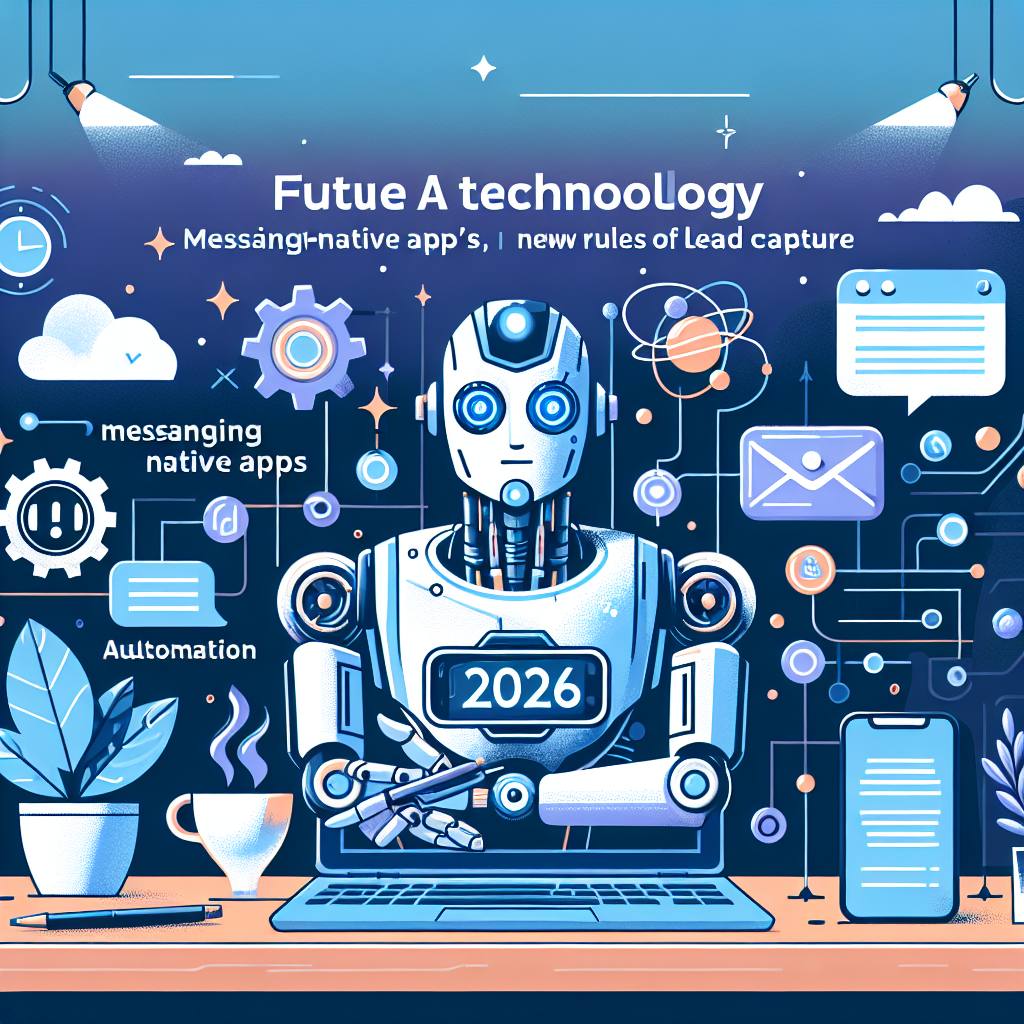
AI is moving from standalone chatbots into messaging-native systems that can act, verify, and follow up across channels in real time. This briefing covers the most important news directions, emerging product patterns, and practical build steps for teams shipping AI features that actually generate revenue and reduce workload.
AI technology headlines can feel like a constant stream of model launches, benchmark charts, and demo videos. But the biggest shift is happening one layer closer to the customer: AI is becoming messaging-native. Instead of asking users to learn a new app or portal, modern AI systems meet people inside WhatsApp, Instagram, Telegram, Facebook Messenger, and web chat, then complete tasks end to end. That is where AI stops being “interesting” and starts being measurable: faster replies, booked meetings, qualified leads, and fewer manual handoffs.
This article breaks down the news and trends that matter most right now, and turns them into practical guidance you can use to build. It is written for founders, product managers, and operations leaders who want to ship reliable AI workflows, not just prototypes.
Recent AI news has made one point clear: model quality is rising across the board, and switching costs are falling. Multiple providers now offer strong general-purpose models, and open-source options keep improving. For builders, this changes the competitive focus.
What differentiates products in 2026 is less about “which model” and more about “which workflow.” The winners will:
That is why messaging automation platforms are growing fast. A tool like Staffono.ai (https://staffono.ai) is designed around the workflow layer: it operates as a 24/7 AI employee that can handle customer communication, bookings, and sales across the channels your customers already use.
Prompt engineering is still useful, but the industry is moving toward systems that assemble context dynamically. The newest practical pattern is “retrieve, reason, act, record”:
In messaging, real-time context is the difference between a helpful assistant and a frustrating one. Example: a customer asks, “Can I book a haircut tomorrow after 5?” A static chatbot replies with generic hours. A context-aware AI checks the calendar, proposes available slots, confirms the service, and books it.
Staffono.ai is built to support this kind of operational context by automating customer conversations and translating them into concrete actions like appointment booking and lead qualification, without forcing customers to leave their chat app.
AI agents are a major trend, but the practical news is not that agents exist, it is that teams are learning where agents help and where they hurt. Unbounded agents can create risk: wrong refunds, incorrect promises, or spammy outreach. Constrained agents, on the other hand, are extremely effective in messaging-heavy businesses.
High-ROI constrained agent tasks include:
The key is to define “safe actions” and “human-required actions.” For example, your AI can propose a refund policy and gather order details, but a human approves the final refund. Or your AI can schedule a consultation, but cannot change pricing without a manager rule.
Customers do not experience “channels,” they experience your brand. A lead might message your Instagram page, then follow up on WhatsApp, then click a link on your website chat. One of the most important changes in AI-powered communication is treating those interactions as one continuous journey with shared memory and consistent rules.
To build for this reality:
Because Staffono.ai operates across WhatsApp, Instagram, Telegram, Facebook Messenger, and web chat, it fits naturally into this trend. Instead of running separate bots per channel, you can orchestrate one consistent AI employee experience.
It is easy to waste months chasing updates that do not move your business metrics. Here is a simple filter for AI news.
The goal is not to build the most advanced AI in the abstract. The goal is to build a system that reliably converts inquiries into outcomes.
If you are building with AI for lead generation, sales automation, or customer operations, start with the message flow. Messaging is where intent appears first, and it is where automation can create immediate business impact.
Pull a sample of your last 500 to 2,000 customer messages. Categorize them into intents such as pricing, availability, location, refunds, product fit, or support issue. Most businesses discover that 10 intents cover the majority of volume.
For each intent, capture:
Good AI conversations feel fast because they ask only what is necessary. A lead intake flow should typically collect:
Then the AI should summarize in one paragraph and propose the next step: book a call, book a slot, or send a quote.
In production, guardrails are not optional. Use:
Many teams measure whether the AI “sounds good.” The better metric set is business-centric:
When you measure like this, you quickly see which intents deserve deeper automation and which should stay human-led.
A small clinic receives hundreds of WhatsApp messages weekly: “Do you have openings?” and “How much is a consultation?” The AI flow checks availability, collects patient name and preferred doctor, offers two time slots, and books the appointment. If symptoms indicate urgency, it escalates to staff.
Outcome metrics: fewer missed calls, shorter booking time, and higher show-up rate with automated reminders.
A digital agency gets Instagram DMs that are often vague. The AI asks about goals, monthly budget range, and timeline, then routes qualified leads to a calendar link and sends a summary to the sales team. Unqualified leads receive helpful resources and an option to re-engage later.
Outcome metrics: higher sales efficiency and fewer unproductive discovery calls.
Customers ask “Where is my order?” repeatedly. The AI requests an order number or phone, checks status, and replies with tracking updates. If shipping is delayed beyond a threshold, it creates a ticket and offers a policy-approved resolution path.
Outcome metrics: lower ticket volume and faster resolution times.
If your business depends on fast responses, bookings, and consistent follow-up, the highest-leverage AI investment is often messaging automation, because it touches revenue and customer experience at the same time. Staffono.ai (https://staffono.ai) provides AI employees that work 24/7 across WhatsApp, Instagram, Telegram, Facebook Messenger, and web chat, helping you capture leads, qualify them, and move them toward a booked call or confirmed appointment.
Instead of stitching together separate bots, scripts, and manual processes, you can use Staffono to centralize the conversation workflow, keep responses consistent, and reduce the operational burden on your team. It is especially useful when your inquiries arrive outside business hours, when response time determines who wins the customer.
Expect the next wave of AI improvements to feel less like “smarter chat” and more like “more reliable operations.” The organizations that win will treat AI as a system: context, constraints, tools, measurement, and iteration. If you build around real message flows and business metrics, you will benefit from model progress automatically, without rewriting your entire product every time a new release drops.
If you want to turn today’s AI trends into practical automation, start with one channel and one high-volume intent, then expand. And if you would rather deploy a ready-to-run approach for messaging, bookings, and lead handling, exploring Staffono.ai can be a straightforward way to put 24/7 AI employees to work and make the technology pay for itself through measurable conversion and time savings.